
Get Answers from the New Nigeria Tax Act with AI
Don't guess about your compliance. Get instant, AI-driven tax estimation, advisory, and statement analysis fully calibrated to the latest 2025 tax laws.
AI Chat Assistant
Ask our AI anything about the new tax laws, reliefs and exemptions. Get accurate, cited guidance in seconds.
Tax Estimator
Run guided simulations for individual or corporate obligations. See how the updated 2025 regulations impact your net bottom line.
Engineered for Modern Nigerian Tax Management
Move from confusion to compliance with our tools built with your needs in mind.
Under Section 15 of the updated Nigerian Tax Act 2025, companies with an annual gross turnover of less than ₦25,000,000 (Twenty-Five Million Naira) are 100% exempt from Corporate Income Tax (CIT).
However, you must still register with the NRS and file basic annual compliance returns to claim this status legally.
Navigating the Major Shifts in Nigerian Taxation
The 2025 Tax Act introduces sweeping reforms to compliance, thresholds, and reliefs. Here is exactly how the new laws directly impact you and your business.
Corporate Tax Re-alignments
The new framework restructures Corporate Income Tax (CIT) by adjusting asset and turnover thresholds for small, medium, and large enterprises.
Small businesses meeting the new baseline remain exempt from CIT, while mid-sized companies benefit from staggered, lower progressive rates to spur growth. Large enterprises must adapt to stricter compliance rules, making accurate tier classification critical to avoiding severe non-compliance penalties.
Personal Income & PAYE Reliefs
Individual tax brackets have been fully restructured to ease the burden on low- and middle-income earners while adjusting rates for high earners.
For individuals, this means a direct increase in monthly take-home pay through expanded tax-free allowances. For businesses, payroll systems must be immediately recalibrated to reflect the new statutory deductions and prevent over-withholding.
Digital & Inflow Auditing
Tax authorities have formalized advanced data-sharing integrations with commercial banks and digital payment gateways to track financial inflows.
Every high-volume business or personal banking inflow is now subject to automated, stricter regulatory scrutiny. To protect against automated audits and misclassifications, transactions must be meticulously documented and reconciled before fiscal filing deadlines.
Value Added Tax (VAT) Adjustments
The Act introduces a phased, upward adjustment to the standard VAT rate alongside a newly expanded list of zero-rated essential goods and services.
Businesses will face higher invoicing complexity and must adjust consumer pricing models to account for the rate changes. However, exemptions on basic commodities provide a vital buffer for consumer spending power and supply-chain logistics.
Withholding Tax (WHT) Simplification
To improve cash flow for small businesses, the new regulations drastically simplify the Withholding Tax regime, introducing lower rates and outright exemptions for key sectors.
Many transactions involving small-scale vendors and service providers are now completely exempt from WHT deductions. This significantly reduces administrative bottlenecks, minimizes double-taxation risks, and leaves more immediate working capital in your business accounts.
Development Levy Consolidation
The Act abolishes several overlapping, sector-specific taxes—such as the Tertiary Education Tax, IT Levy, and Police Trust Fund levy—and replaces them with a single consolidated Development Levy.
For business owners, this eliminates the administrative nightmare of dealing with multiple micro-levies and agencies. It streamlines corporate compliance down to a single, unified payment framework, significantly reducing your operational overhead and filing time.
Stay Ahead of your obligations: Get Insights & Guides from our articles
Expert breakdowns, compliance checklists, and practical advice on navigating Nigerian fiscal policies.

How to Automate Tax Compliance in Nigeria: The Ultimate Guide for SMEs and Corporations
A complete, realistic guide on streamlining tax compliance in Nigeria using tools like TaxPro Max, cloud accounting, and ERP integrations under current laws.

Maximizing Your Tax Reliefs Legally Under the New Laws: A Strategic Guide
Maximize your tax reliefs legally under the Nigeria Tax Act 2025: personal progressive tax bands, statutory rent relief, and corporate exemptions.
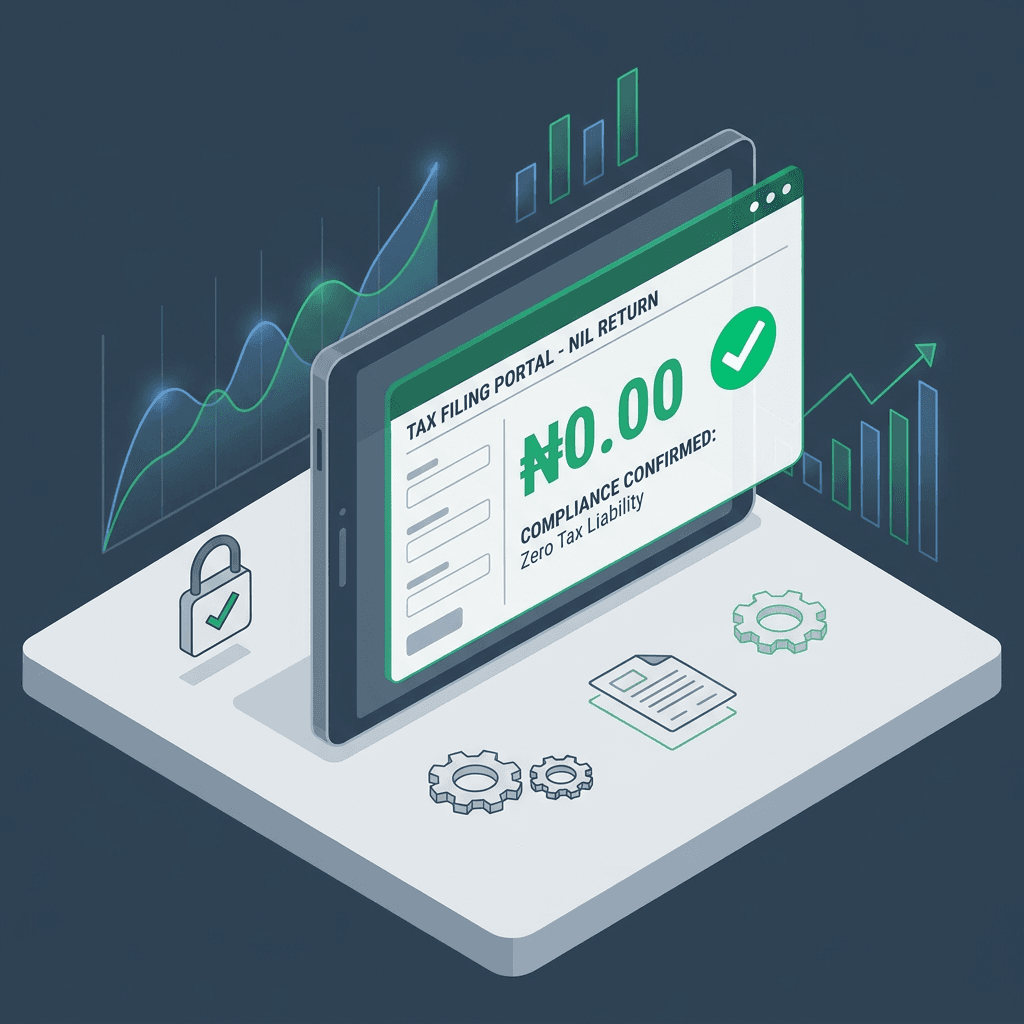
How to File a Nil Tax Return Under the 2025 Act: A Guide for SMEs
A step-by-step guide for Nigerian SMEs on how to file a Nil Tax Return on Taxpromax, maintain compliance, and avoid penalties under the Tax Act 2025.